Investing · · 4 min
How to Invest in Nuclear Energy – Beginner’s Guide
Archived article from 21 February 2022. Prices, results and products change, so check the current details before you buy or trade.
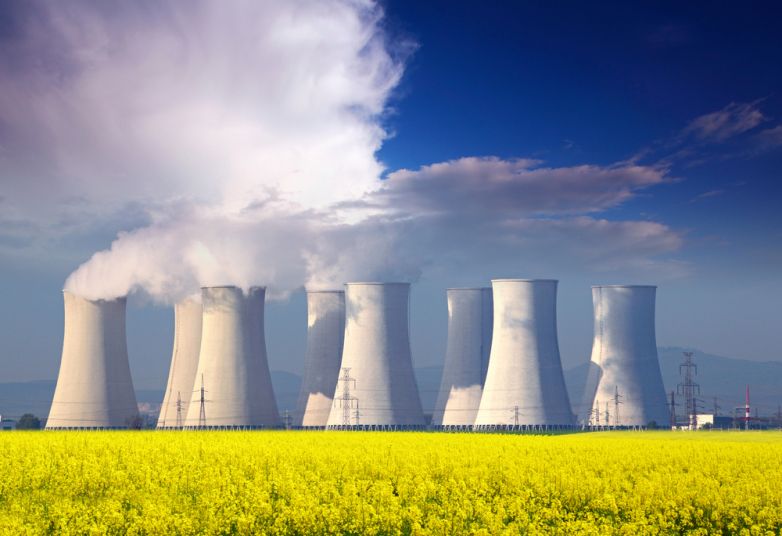
The green energy revolution, the decline of coal and other fossil fuels, and the rise of renewable energies provide investors a once-in-a-lifetime chance to invest in nuclear energy. Nuclear energy is a carbon-free source of power that is ideal for steady baseloads. Developed nations are growing the number of nuclear power plants while developing countries are boosting the capacity of their reactors. The demand for uranium will rise as a result of this. However, because we are only emerging from a 10-year uranium bear market, stockpiles and the secondary market have dried up, and demand will soon outstrip supply, ushering in a new uranium super-cycle; this is why you should consider investing in nuclear energy.
Introduction
Uranium is not sold on the open market because of its radioactive constituents, unlike most other commodities such as oil, gas, coal, or gold. This means traders can't trade uranium directly and must rely on alternatives like uranium miners, nuclear stocks, exchange-traded funds, and royalties.
1. Stocks
Purchasing stocks is one of the methods to invest in uranium. Because the uranium price is still relatively low, there are attractive discounts. You might wish to start with some mining stocks such as Cameco Corp, Kazatomprom (KAP), Energy Fuels Inc. (UUUU), and Ur-Energy Inc. (URG). There are also diversified miners that also extract substantial quantities of uranium; they include BHP Group (BHP) and Rio Tinto Group (RIO).
Investors can make educated judgments by knowing where these firms' uranium mines and production facilities are situated. Those looking for uranium stocks should consider the nations that produce the majority of the metal. Kazakhstan, Canada, and Australia were the top three uranium-mining states in 2021.
Additionally, Uranium Participation is an intriguing alternative for investors. The corporation owns real uranium, and its stock price reflects the underlying commodity price. As a result, it gives investors access to actual uranium.
You may also wish to look at a number of mid-tier and junior uranium prospecting firms. These equities are traded on the Toronto Stock Exchange (TSX) and TSX Venture Exchange (TSXV). Some of them include Forum Energy Metals, Mega Uranium, Skyharbour Resources, CanAlaska Uranium, and Trench metals.
2. Exchange-Traded Fund (ETF)
These are often the way to go if you want market exposure but prefer the diversification of a basket of shares over single stocks. Unfortunately, the number of uranium-focused exchange-traded funds is limited. There are just four choices available.
The first is the Global X Funds (ARCA: URA). It gives investors access to a wide range of enterprises involved in uranium mining and nuclear component manufacture, including those engaged in extraction, processing, exploration, or the manufacturing of uranium and nuclear industry equipment. It aims to produce investment outcomes that are broadly comparable to the Solactive Global Uranium & Nuclear Components Total Return Index's price and yield performance before fees and costs.
The second is the Van Eck Market Vectors Uranium + Nuclear Energy ETF (ARCA: NLR). The Fund aims to match the Market Vectors Global Uranium and Nuclear Energy Index's price and yield performance. It invests at least 80% of its total assets in equity shares of domestic and international enterprises principally involved in nuclear energy-related activities.
The North Shore Global Uranium Mining ETF is another option (ARCA: URNM). It's a global fund including corporations from Kazakhstan, Canada, and the United States. The ETF monitors producers, explorers, and holders of the physical commodity using the North Shore Global Uranium Mining Index.
Horizons ETFs Management created a new ETF in mid-2019 that includes Canadian uranium miners. The Horizons Global Uranium Index ETF (TSX: HURA) is designed to provide investors with exposure to the uranium industry's recovery.
3. Futures
Futures are financial contracts that bind the buyer to buy (or the seller to sell) a certain item, such as a physical commodity or a financial instrument, at a specific future date and price. Uranium futures offer investors a direct market for uranium price exposure. Before moving on to this alternative, you must first become a pro.
The CME Group Inc. (CME) provides monthly uranium contracts that are priced in US dollars per pound. Each contract unit weighs 250 pounds, but because they are debt-free, you cannot accept delivery and wind up with a mound of fissionable material in your backyard.
Investing in uranium through futures contracts is incredibly risky. Although all futures contracts are unpredictable, the illiquidity of the supporting commodity makes this type of uranium investment unsuitable unless you actually want to speculate on price movement.
4. Royalties
Uranium Royalty Corp is another alternate investment (UROY). It is a royalty firm established in Canada. The company is pursuing uranium price exposure through strategic investments in royalties, streams, debt and equity investments in uranium firms, and actual commodity holdings.
The firm is ideally positioned as a finance provider to a sector that requires huge investments in worldwide production capacity to fulfill the expanding demand for uranium as a fuel for carbon-free nuclear energy.
Why should you invest in uranium in 2022?
- The worldwide nuclear sector has restored the output of nuclear electricity beyond pre-Fukushima levels during the last eight years. Japan has made a deliberate effort to restore its nuclear power capacity.
- Prices were influenced by political uncertainty, as US President Donald Trump increased pressure on Iran by imposing sanctions and conducting Section 232 investigations into uranium imports.
- Cameco Corp., the world's largest uranium company, has extended a previously brief suspension of its flagship McArthur River mine indefinitely.
- Kazatomprom has kept its promise to cut 20% of its scheduled output. These drastic production cuts, along with increased demand, might eliminate the majority of uranium inventories, allowing prices to rise.
Summary
The role of nuclear energy in a carbon-free future is critical, and it is one of the finest alternatives to any existing technology. There are several ways for investors to participate in the uranium bull market and benefit from it. Because capabilities are gradually developed and planned, investing in this sector requires a long-term investment view.
Don't miss: The Best Forex Robots in 2021