Market outlooks · · 5 min
Top 5 Worst Chinese Stocks to Sell in 2022
Archived article from 20 January 2022. Prices, results and products change, so check the current details before you buy or trade.
Chinese stocks endured one of the worst runs in the market last year. Government crackdown on a wide array of US-listed stocks resulted in most losing a significant amount of market value. Covid-19 restrictions, power shortages, and global supply chain issues exacerbated the situation, denting most of the stock's sentiments in the market.
While some stocks have bounced back after a sell-off to multi-year lows, their outlook has not improved to justify buying. With the companies not yet out of the woods amid the developments in China, the stocks could come under pressure in 2022.
Below are some of the worst Chinese stocks to sell in 2022.
Scandal riddled Luckin Coffee
Luckin Coffee (OTC: LKNC.Y), once a $12 billion company, has shed a significant amount of market value over the past year and is now valued at about $2 billion. While most Chinese companies have been battered by regulatory pressure, the company's woes have been self-inflicted.
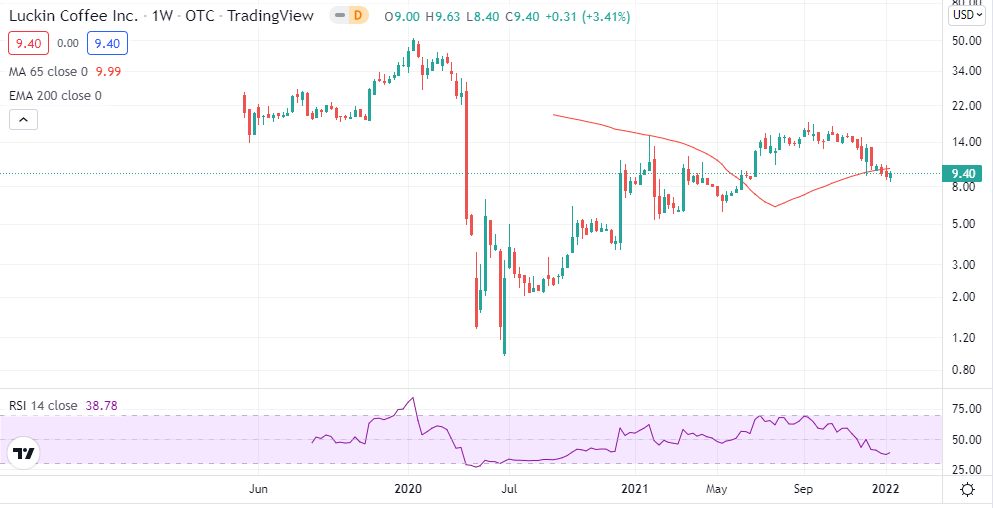
The scandal-riddled company has seen its sentiments take a significant hit resulting in $9 billion worth of investors' capital being wiped out. In 2020 the company was found guilty of fabricating 2.2 billion yuan in sales.
The company was hit by $180 million in fines by the Securities and Exchange Commission, resulting in its delisting from the NASDAQ. Amid the legal woes, the company has succeeded in keeping its shops open in China. While site economics have started to improve, Luckin Coffee still possesses some significant risks to any would-be investors.
The company has a significant amount of debt on its books that could be a problem going forward. Additionally, the COVID-19 situation, which is refusing to go away, is another headwind that could affect its operations in the future. That said, any bounce-back in the market will only present an opportunity for investors to sell the stock, given the underlying risks.
Didi delisting push
Didi is one Chinese mobility technology company that has endured a tumultuous run over the past year. Since going public mid last year, the company has shed more than 70% in market value having felt the full brunt of a Chinese government crackdown on tech giants listed abroad.
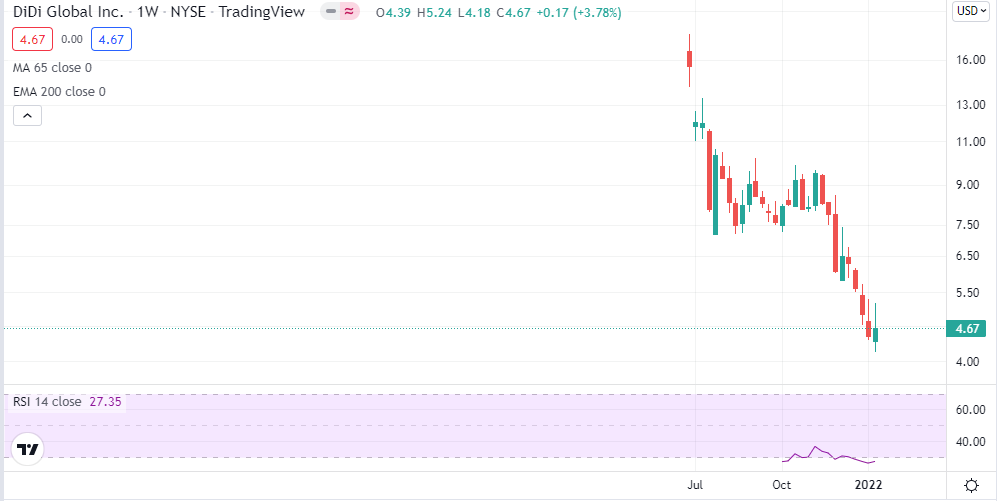
Beijing has been hard on the company demanding its delisting from the New York Stock Exchange. Authorities have also demanded the company take down its software from the mobile app store as it continues to be investigated over allegations of mishandling customer data.
Widening net loss and a decline in third-quarter revenue affirm that the company is in trouble and likely to remain under pressure going forward. Its operating loss for the nine months ended September 2021 hit highs of $6.3 billion as revenue fell by as much as 2%.
Competition from other ride-hailing companies in China led by Geely and SAI Motor affirmed the doomed Didi Global prospects in its most important market. Adding to the regulatory pressures, the company could remain under pressure this year, which could see the stock underperform ahead of the proposed delisting from the US market.
New Oriental Education & Technology uncertain future
A crackdown on the Chinese education sector is the reason behind New Oriental Education & Technology (NYSE: EDU) shedding more than 80% in market value over the past year. The company was forced to lay off more than 60,000 employees last year in response to the sweeping overhaul of the industry.
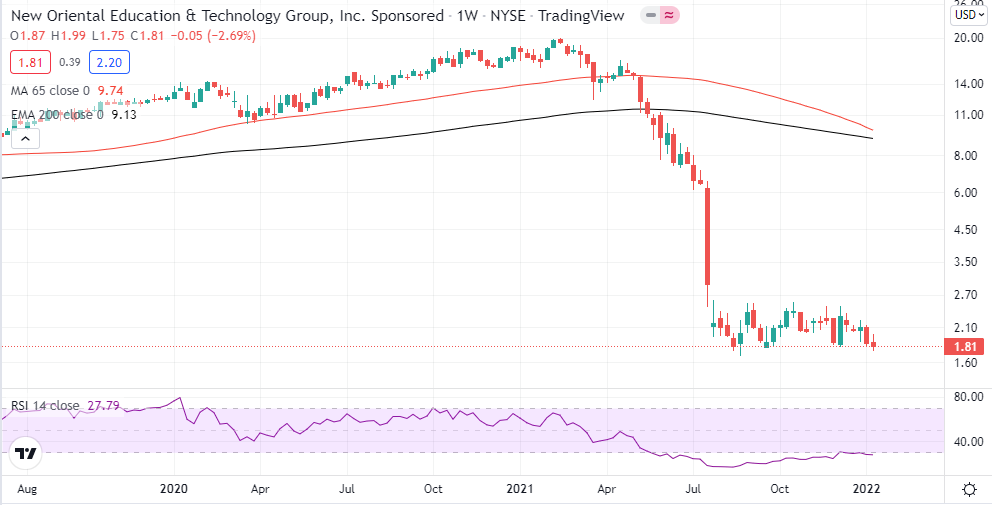
While the company did endure too many challenges in 2021, the situation is not expected to change for the better in 2022. Consequently, the stock could come under immense selling pressure with any bounce-back after plummeting to record lows.
By market cap, the largest private education company remains the biggest casualty of the widespread restriction imposed on the $120 billion private tutoring sector. Beijing is banning for-profit and after-school tutoring services that have rendered the company's core business null and void.
The fact that the company can no longer attract clients as it did in the past means it cannot make any profits. The government has also made it difficult for the company to raise capital. The suspension of online and offline tutoring classes means New Oriental Education & Technology faces an uncertain future until it rediscovers itself.
Pinduoduo regulatory and competition pressure
Pinduoduo (NASDAQ: PDD) is another Chinese company reeling from the effects of a massive crackdown on the Chinese technology sector. After rallying by more than 300% in 2020 at the height of the pandemic as most people resorted to shopping online, the company came under pressure shedding more than 70% of the gains.
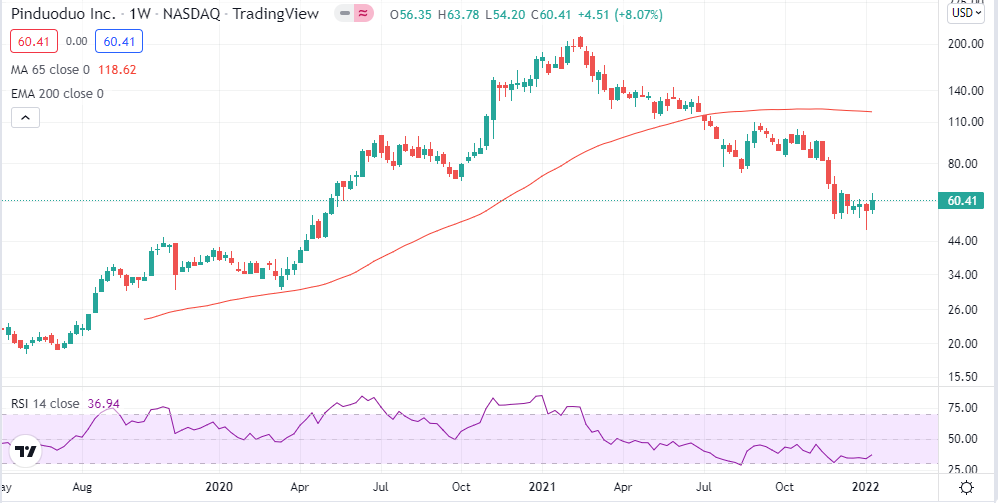
Beijing setting sights on tech behemoths that play a dominant role have come to bite the online marketplace platform, which is also facing stiff competition from other players in the industry. Sentiments on the e-commerce company have turned bearish on the government imposing hefty fines and launching numerous antitrust crackdowns.
Things are not looking any better, with the stock trading at 75% below its all-time highs. Stiff competition from industry heavyweights such as Alibaba (NYSE: BABA) could come to bite the company. Consequently, the stock could remain under pressure in 2022
JD.com underperformance
Last year JD.com (NASDAQ: JD) was seen as a safe bet as the company was not the subject of intense regulatory scrutiny. The company ended up shedding about 20% in market value. In contrast, Alibaba and Pinduoduo fell 50% and 70%, respectively.
The company's underperformance despite not facing significant regulatory pressure is a red sign. Tencent announcing it will reduce its stake in the company to about 2.3% should be a point of concern.
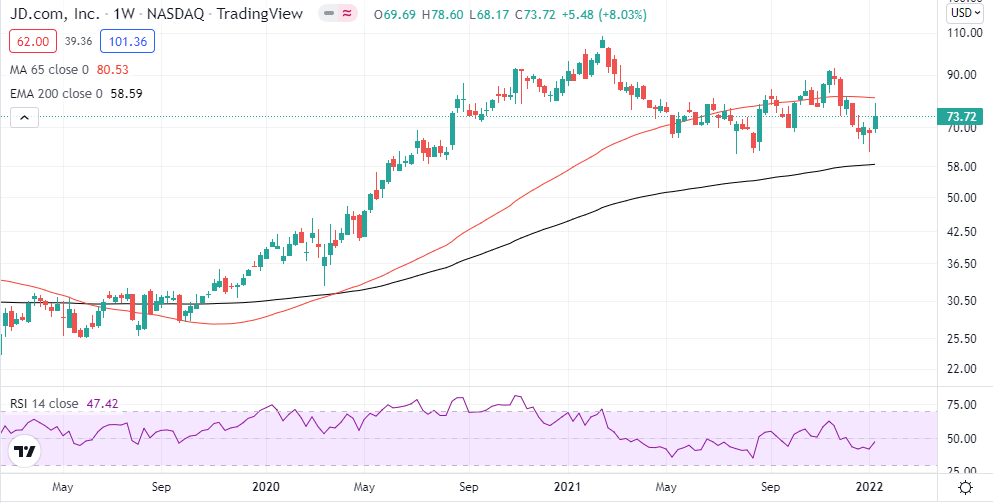
Over the years, JD.com and Tencent have pooled resources together to take on industry heavyweight Alibaba. While the big divestment is likely to appease antitrust authorities, it will leave JD.com vulnerable to its largest rival in the e-commerce
Chinese tech companies have been forced to set aside a significant amount of their capital to fund government-backed initiatives and redistribute wealth. Alibaba has agreed to spend $15.7 billion while Pinduoduo has allocated about $1.6 billion.
JD.com, on the other, has not made any commitments. However, it has opted to increase benefits to its drivers. The move is likely to benefit the drivers but leads to a squeeze of the company's single-digit percentage margins.
In addition to margin squeeze, the company is also not immune to regulatory pressure. Taking into consideration all these red flags, JD.com could remain under pressure in the market.
Don't miss: The Best Forex Robots in 2021