Guides · · 5 min
What Is Drawdown in Trading? Max Drawdown Explained
Drawdown is the fall from an account peak to a later low. Max and relative drawdown explained, why losses need bigger gains to recover, and what to check on robots.
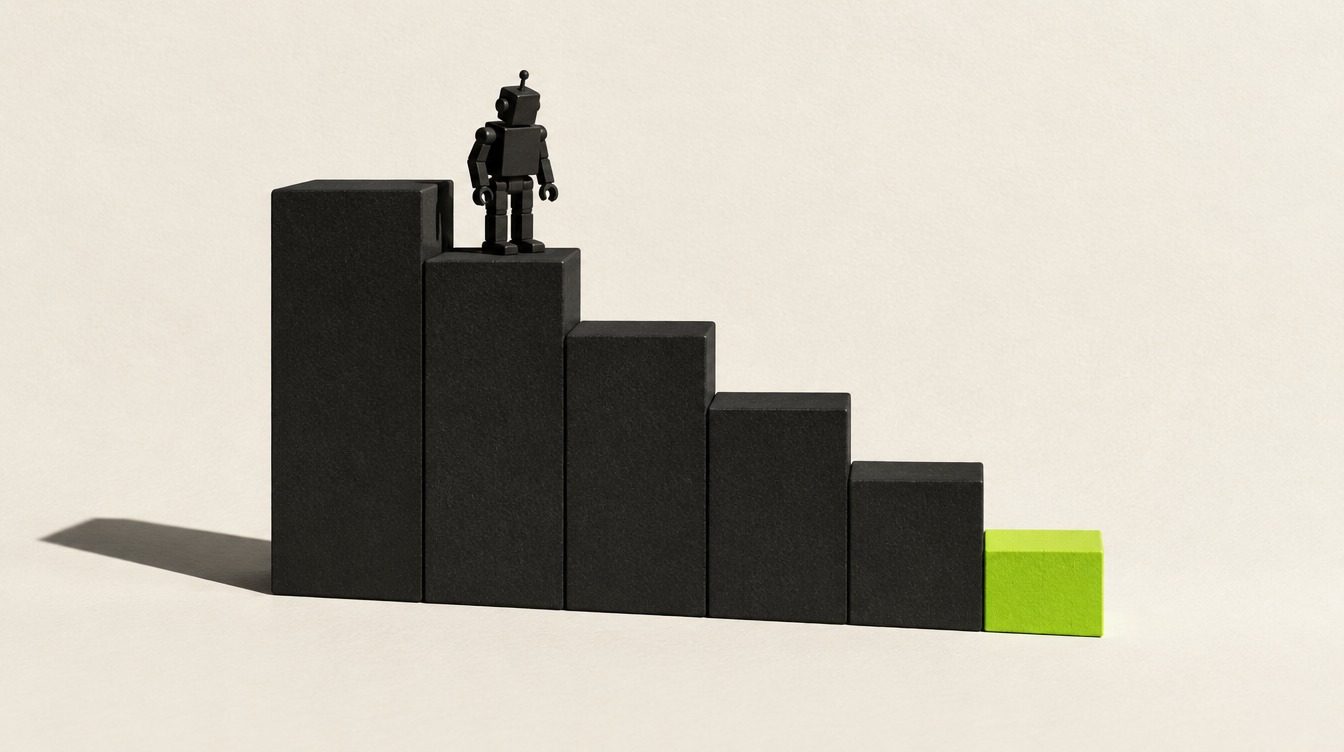
Drawdown in trading is the fall in an account's value from a peak to a later low, before a new high is reached. Max drawdown is the largest of those falls over a period. It tells you how much pain a strategy or forex robot has put an account through, which is often more useful than how much it made.
The short version
- Drawdown measures peak-to-trough decline, in money or as a percentage of the peak.
- Max drawdown is the worst peak-to-trough fall in the record; it is the number to judge risk by.
- Losses need larger gains to recover: a 50% drawdown needs a 100% gain to get back to the peak.
- MT4 reports three versions (absolute, maximal and relative), and they answer different questions.
- Balance-only drawdown can hide floating losses, which is how many martingale robots look safe.
What is drawdown in trading?
Picture an equity curve: the line showing your account value over time. Every time it reaches a new high, that becomes the reference peak. If the line then falls, the distance from that peak to the lowest point before a new high is a drawdown. When the account finally makes a new high, the drawdown is over and its length (in days or weeks) is the recovery time.
Drawdown is usually quoted as a percentage. If an account rises to $12,000, falls to $9,000 and then recovers, the drawdown was $3,000, or 25% of the $12,000 peak. Note that it's measured from the peak, not from your starting deposit; an account can be in profit overall and still be in a deep drawdown.
What is max drawdown?
Max drawdown (MDD) is the largest peak-to-trough decline over the whole record. A strategy might have dozens of small drawdowns and one large one; the large one is the max drawdown, and it's the number most traders use to size risk.
Two cautions apply. First, max drawdown only describes the past. The worst drawdown a system has had is not the worst it can have, and the longer a strategy runs, the more likely a deeper one becomes. Second, the figure depends on what is measured. A drawdown calculated on closed-trade balance can be far smaller than one calculated on equity, which includes losing trades that are still open.
Absolute, maximal and relative drawdown in MT4
MetaTrader 4's strategy tester report shows three drawdown figures, defined in the MT4 help on the strategy tester report. They are easy to confuse:
| MT4 figure | What it measures | What it's good for |
|---|---|---|
| Absolute drawdown | The largest loss below the initial deposit | How far the account dipped under its starting balance |
| Maximal drawdown | The largest loss from a local high, in money and as a percentage | The biggest single peak-to-trough fall in money terms |
| Relative drawdown | The largest loss as a percentage of the equity peak, plus its money value | The worst fall in percentage terms |
Maximal and relative drawdown often describe different episodes. A $2,000 fall from a $20,000 peak is a bigger money loss than a $1,500 fall from a $5,000 peak, but the second is a far larger percentage (30% against 10%). Relative drawdown is usually the more useful figure when comparing systems, since it scales with account size. Our guide to backtesting an EA in MT4 shows where these numbers appear and how to read the rest of the report.
Why drawdown matters more than profit
Losses and gains aren't symmetrical. After a loss you have less capital working, so you need a larger percentage gain to get back to where you were:
| Drawdown | Gain needed to recover |
|---|---|
| 10% | 11.1% |
| 20% | 25% |
| 30% | 42.9% |
| 50% | 100% |
| 75% | 300% |
Beyond about 30%, recovery becomes a long climb, and traders tend to abandon systems or raise risk at exactly the wrong time. That's why many traders compare return against drawdown rather than return alone: a robot making 40% a year with a 60% max drawdown is a much rougher ride than one making 15% with a 10% drawdown.
Drawdown in forex robots: what to watch for
Drawdown is where most commercial robots fall apart. Of the 230 forex robots rated in our archive, the average score was 4.35 out of 10, only 5 scored 8 or higher, and 125 scored below 4.5. Things to check on any EA's results:
- Equity versus balance: a smooth balance curve with no closed losses, alongside large floating losses, is the signature of martingale and grid systems. Their real drawdown sits in open trades until it is realised all at once.
- Test length: a few months of results can't show a strategy's worst case. Look for several years, across different market conditions.
- Backtest against live: live drawdown is typically worse than backtested drawdown because of spreads, slippage and changing conditions.
- Drawdown against the claimed return: very high returns with a tiny drawdown deserve suspicion, not excitement.
Our review of whether forex robots work goes through what the archive data shows, and the forex robot reviews list each rated EA with its score.
How to limit drawdown
- Risk a small fixed share per trade. Risking 1% rather than 5% per trade makes a long losing streak survivable.
- Set a maximum drawdown limit at which you stop trading the system and review it, decided before you start.
- Avoid adding to losers unless that is a deliberate, tested part of the plan with a hard cap.
- Use lower leverage. High leverage turns ordinary price moves into deep account drawdowns.
- Diversify across strategies or pairs that don't all lose at the same time.
FAQ
What is a good max drawdown?
There's no single figure, but many traders aim to keep max drawdown below 20% to 25%, because deeper falls need much larger gains to recover and are hard to sit through. It should always be judged alongside the return.
What is relative drawdown?
In MT4, relative drawdown is the largest loss expressed as a percentage of the equity peak it fell from. It's useful for comparing strategies run on accounts of different sizes.
What does drawdown mean in forex?
It means the same as in any market: the decline in your trading account from its highest value to a later low, usually quoted as a percentage of that high.
Is drawdown the same as a loss?
Not exactly. A loss is a single losing trade, while drawdown measures the total fall from a peak, which may include many trades and open positions that haven't been closed yet.
Trading forex and using robots carries a high risk of loss; past drawdown doesn't limit future drawdown.