Crypto trading · · 5 min
An Account of Famous Hacks in Cryptoverse

Archived article from 29 November 2021. Prices, results and products change, so check the current details before you buy or trade.
When explaining the nature of blockchain technology, Bitcoin’s founder Satoshi Nakamoto implied it was impossible to hack. According to the whitepaper, the technology entails a distributed ledger spread across a network of nodes. The decentralized nature eliminates a central point of failure, making it impossible for bad actors to hijack the network.
Thanks to various crypto hacks reported over the past decade, one might argue that blockchain’s initial invincibility no longer exists. Today, we’ll discuss the largest hacks on record with particular attention to how they happened.
Poly Network heist ($610 million in assets stolen)
We begin with the industry’s most recent hack, one that shook the entire cryptoverse to the core. After years of such encounters, one would imagine that blockchain developers have the necessary experience to rebuff unauthorized penetration of their networks.
In Poly Network’s case, one could argue that the hackers targeted a nascent niche where security protocols are not yet robust. So, what is Poly Network, and how did the breach happen?
Poly Network is a protocol that enables the cross-chain transfer of crypto assets. The platform came to fruition in 2020 and is a joint project of Neo, a decentralized applications (dApps) platform, and Switcheo and Ontology.
Customers rely on Poly Network to transfer tokens, such as Ethereum (ETH), from one blockchain to another. So, for example, one could use the protocol to move ETH tokens from the Binance Smart Chain to the Ethereum blockchain network.
On 10 August 2021, blockchain security analysts from SlowMist Zone brought attention to the breach in a Medium post. They explained that the hackers exploited the smart contract that facilitates cross-chain assets transfer.
According to the post, the smart contract facilitates transactions among three networks: Ethereum, Polygon, and Binance Smart Chain. Thus, it maintains large liquidity amounts for efficient token swapping.
The hackers gained access to the smart contract via a bug then overrode the asset transfer protocol for each of the associated blockchains. Then, they diverted $610 million worth of tokens to three different wallet addresses.
About two weeks after the incident, Poly Network revealed they had reached an agreement with the hacker and had begun the process of restoring the funds. At writing, the hacker had returned approximately $400 million, with further negotiations ongoing.
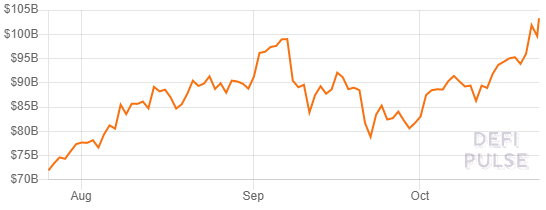
Poly Network is a critical cog in the decentralized finance (DeFi) machinery, and the exploding value of the sector could explain the motivation for the hack. There was $103.29 billion in total value locked in DeFi projects at writing, a record peak.
Coincheck breach ($534 million in assets seized)
Before Poly Network, the Coincheck hack was the largest in cryptoverse history. Before the unfortunate occurrence, Coincheck was Japan’s largest and most popular digital currency exchange.
On 27 January 2018, Coincheck released a statement saying it had suspended some of its functions. The company explained that hackers had broken into its network, and they were working hard to restore normalcy.
After the investigations, Coincheck admitted losing 523 million NEM tokens (worth more than $530 million when the breach happened). Further reporting on the incident revealed the hack was possible because Coincheck Inc. stored NEM tokens in a hot wallet instead of a cold wallet. In addition, the company cited staff shortages and technical difficulties leading to expensive errors.
The Mt. Gox calamity ($460 million in assets lost)
Many remember Mt. Gox hack not because it was the first high-profile case but because of the scale of the value of stolen assets. A few months before the breach in June 2011, bad actors accessed a BitcoinTalk forums user’s wallet (whose username was Allinvain) and made away with 25,000 Bitcoins. This was not big news because the tokens amounted to about $500,000.
In late 2011, Mt. Gox reported the first hack, barely months after Allinvain’s loss. At the time, Mt. Gox was a colossal digital currency exchange that handled close to 70% of all Bitcoin transactions.
For starters, we should mention that Jed McCaleb started Magic: The Gathering Online in 2007 and later rebranded it as Mt. Gox. McCaleb co-founded Ripple but left in 2013 to establish Stellar.
As Mt. Gox gained global repute, McCaleb unloaded the exchange to Mark Karpeles, based in Japan. However, according to media reports, Mt. Gox was lax in identifying and patching security holes under the new management. For example, one insider shared that the development cycle of the exchange’s core architecture lacked a version control tool – a basic feature in software development.
Naturally, bad actors seized the opportunity to purloin 744,408 BTC tokens. At the time, the assets’ value was $460 million, more than $40 billion at writing. It is worth noting that the Mt. Gox calamity unfolded for over two years, between late 2011 and early 2014.
The KuCoin mishap ($280 million in assets lost)
We classified the KuCoin hack as an unlucky accident because of how it happened.
On 26 September 2020, KuCoin circulated a statement to its users updating them of a “security incident.” The team said it had “detected some large withdrawals” in the past three days, and an internal audit had shown about $280 million worth of ERC-20, Bitcoin, and other tokens were missing.
The statement further outlined that the targeted assets were stored in the company’s hot wallets. If you may recall, the Coincheck breach also followed the same script.
In its defense, however, KuCoin said its security systems were robust, and the hackers gained access to the network via social engineering. In addition, further analysis by Chainalysis established that the hackers had tricked one of KuCoin’s employees into giving away private keys with access to the company’s wallet.
Luckily, Chainalysis helped the exchange to recover most of the stolen funds, about 84%. In addition, KuCoin also had an insurance fund set up in case of a breach, which helped refund the affected customers.
Conclusion
Undoubtedly, few people have the same trust in blockchain today as Nakamoto might have hoped. The situation becomes more hopeless when one realizes that crypto assets worth $2 billion were stolen between 2017 and February 2019.
Nevertheless, it is fair to say that most exchanges and other stakeholders have learned the lesson. For instance, the frequency of crypto hacks is lower today, and the nature of attacks is different.
Don't miss: The Best Forex Robots in 2021